63% off on product page · save $10.09
Stainless Steel BBQ Grill Thermometer: 50°F to 800°F
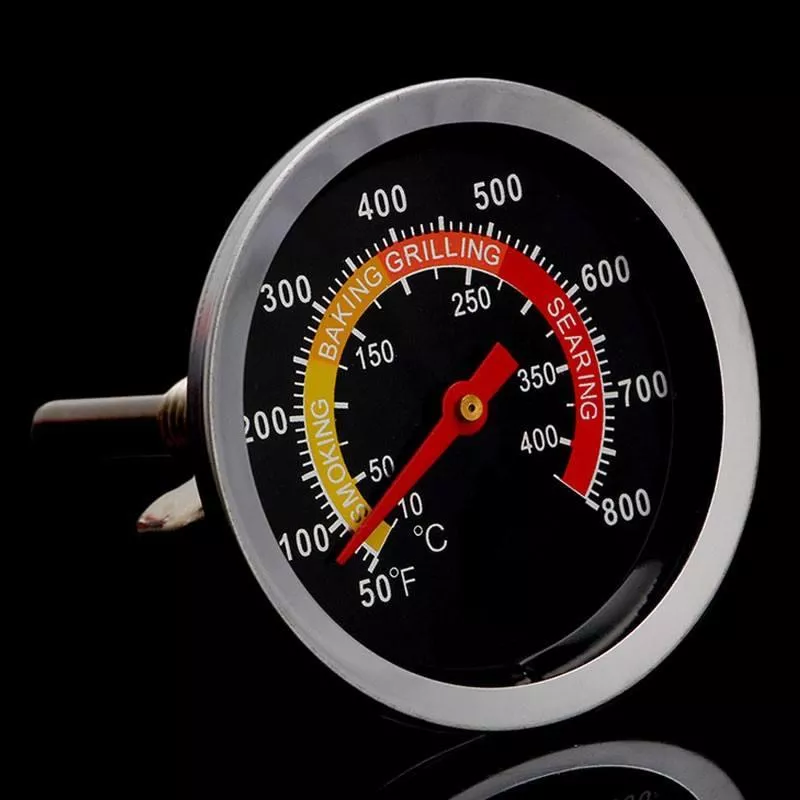
A Reference Point for Grill Heat
Our stainless steel BBQ grill thermometer gives you a way to watch the temperature around the gauge as your grill preheats and cooks. Its Fahrenheit scale runs from 50°F to 800°F.
Use the reading to see how your grill responds to a burner or airflow adjustment. Give it time to settle before making another change, and remember that the temperature at the gauge can differ from the heat at the cooking grate.
Using the Fahrenheit Scale
The scale indicates the temperature around the gauge. Depending on where the gauge sits, that temperature can differ from the heat at the cooking grate. It also does not measure the internal temperature of a steak, chicken piece, or other food.
Use these ranges as approximate starting points. Recipes, grill designs, weather, and fuel can all affect how your cook progresses, so adjust your approach as needed.
Approximate Grill Temperature Guide
| Cooking approach | Approximate temperature | Example |
|---|---|---|
| Low and slow | 225–275°F | Slow-cooked ribs |
| Moderate heat | 325–375°F | Chicken pieces |
| High heat | 450–550°F | Searing steaks |
For a longer cook, look for a reasonably stable reading rather than chasing every small fluctuation. For high-heat cooking, allow enough time for the grill to preheat and follow your recipe’s directions for positioning and turning the food.
Featured in this guide
stainless-steel-bbq-grill-thermometer-gauge-50-to-800f
Before You Fit the Gauge
Before buying, compare your grill’s existing opening and mounting requirements with the product details. The gauge needs to fit its intended location and be secured according to your grill manufacturer’s instructions; a familiar-looking dial alone does not establish compatibility.
Follow the manufacturer’s instructions for installation or replacement. Avoid drilling or otherwise modifying your grill without suitable guidance.
Use a Separate Food Thermometer
Insert a food thermometer into the thickest part of the food, following its placement instructions. Consult the USDA safe minimum internal temperature chart for the food you are preparing and any recommended rest time.
After cooking, let the grill cool before cleaning the gauge face. Use a gentle method appropriate for the surface and avoid abrasive tools that could make the markings harder to read.
If you are coordinating a larger cookout, our vendor coordination log is another available product for keeping vendor information together. It is separate from your grill and food-temperature checks.
Before choosing, compare the product details with your daily routine, available space, care needs, and preferred setup. The strongest option is usually the one that fits the intended use clearly and remains simple to clean, store, and check before repeat use.
It is also worth checking measurements, material notes, included parts, and compatibility details so the item matches the way it will be used after delivery.
FAQ
Is stainless steel good for a barbecue plate?
Yes, stainless steel can be a practical barbecue plate material and is generally straightforward to maintain. Choose a plate designed for cooking and follow its care instructions.
Is stainless steel or cast iron better for a barbecue grill?
Stainless steel is generally easier to maintain, while cast iron retains heat well but needs careful upkeep. The better choice depends on your cooking and maintenance preferences.
See if stainless-steel-bbq-grill-thermometer-gauge-50-to-800f fits your setup